
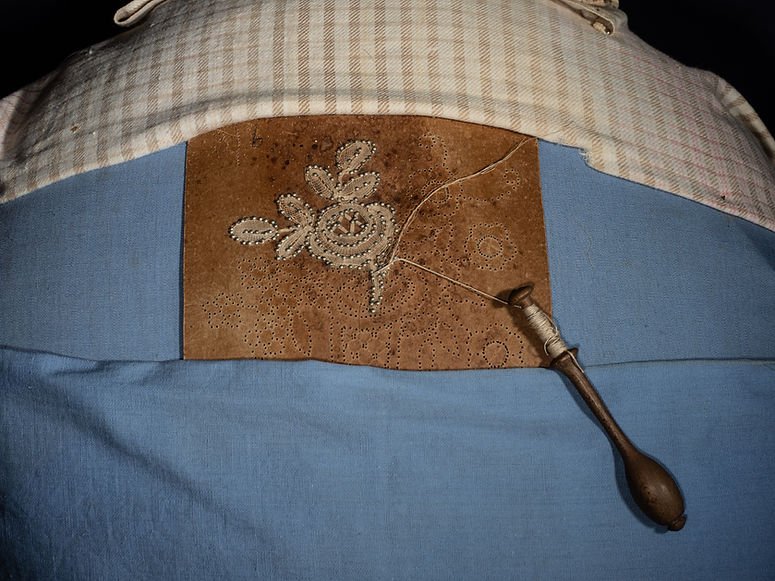
This Lace pillow is associated with Diss Lace Association and is known as Honiton-type lace pillow. The pillow is tightly packed with barley straw and the cover cloth is to keep the work in progress clean and to prevent the thread catching on the pins.
This pillow and style of lace making are attributed to the techniques created by Honiton Lacemakers which dates to the early 17th century. They are renowned for their intricate designs featuring scrollwork and motifs such as flowers and leaves. The pillows would have been handmade by the lace workers themselves.
The lace-making process involves pricking out the design pattern on a waxed card, which is then pinned onto the pillow, filled with straw or bran The pillows would often be round or bolster-shaped, which served as the firm and flexible base to pin patterns and manipulate the threads with bobbins.
The turned wooden bobbins were wound with fine linen thread and the bobbin threads are twisted to create the lace motif. Each motif would take some hours to make.
This type of lace making is made up of separate parts called motifs, they are then sewn together onto a net ground, or joined together with whipped threads called plaits, also known as "brides" or connecting bars.
In 1901 when the Diss Lace Association was set up, they adopted this way of making lace. Local young women, who could not go out to work, were trained to make this lace which provided them with an income.
Lace Pillow
Below is a selection of photographs taken by Diss Camera Club. All images are copyright of Diss Camera Club, except those individually credited. Click on the individual pictures to find out more about each one.

